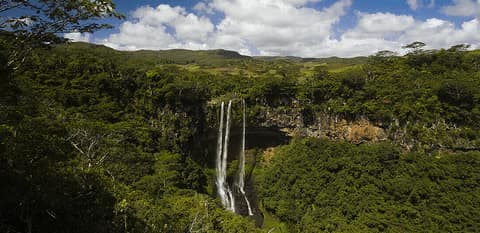
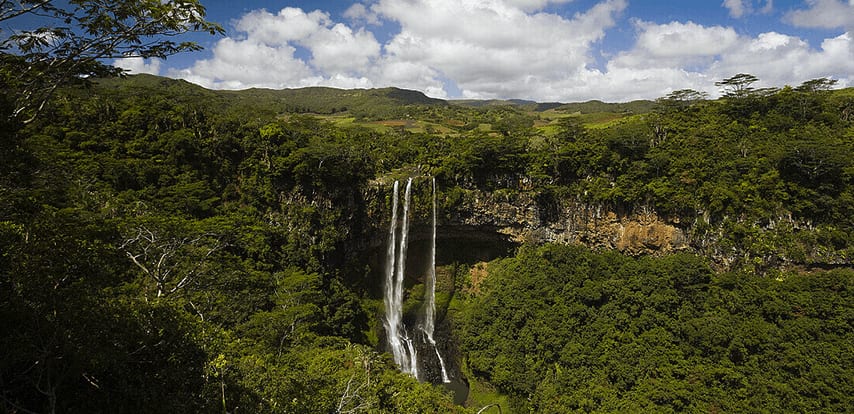

Chamarel Waterfall is one of the signature natural sights of southwest Mauritius. It is often visited together with the Seven Coloured Earths, but the waterfall itself deserves a proper stop: a high stream drops from a dark volcanic cliff into a green valley, with dense tropical forest around it and the cooler, hillier atmosphere that makes Chamarel feel different from the beach resorts.
This is not usually a half-day hike or a remote adventure. It is a strong scenic stop within a wider route through Chamarel and the southwest. That is exactly why many travelers enjoy it: the main viewpoint is easy to reach, the view is immediate, and the waterfall fits naturally into a day that may also include the village of Chamarel, mountain roads, viewpoints, Black River Gorges, Le Morne or the west coast.
Why visit Chamarel Waterfall
Chamarel is commonly described as the tallest waterfall in Mauritius. The stream is fed by several watercourses and falls from more than one hundred meters, so even from the upper viewing area it feels large and dramatic. During drier periods the fall may look narrower and more sculptural; after rain it can become louder, broader and more powerful. Either way, it shows a side of Mauritius that is easy to miss if you stay only along the coast.
The appeal is also practical. Many impressive waterfalls require a long walk, a local guide or a muddy trail. Chamarel is much easier for most visitors: you can stop, enjoy the panorama, take photos and continue your route without turning the day into a demanding trek. It works for couples, families, first-time visitors and travelers who want a scenic nature stop without complicated logistics.
What to see at the waterfall
The main experience is the viewpoint over the waterfall and forested valley. From here you can see the height of the drop, the white stream of water, the dark rock face and the thick vegetation below. It is the most reliable place for photos and the best angle for understanding the scale of the site.
Part of the pleasure is the approach through Chamarel itself. The road passes through a greener, hillier landscape than many coastal areas, with bends, slopes and glimpses of forest and village life. Even if you spend only a short time at the waterfall, the drive makes the visit feel like part of a larger journey into the interior of the island.
If additional paths or lower viewpoints are available during your visit, check the conditions locally before using them. Rain can make soil, rocks and steps slippery, and access can change depending on weather and maintenance. For most travelers, the upper viewpoint is enough for a satisfying visit.
Best way to include it in your route
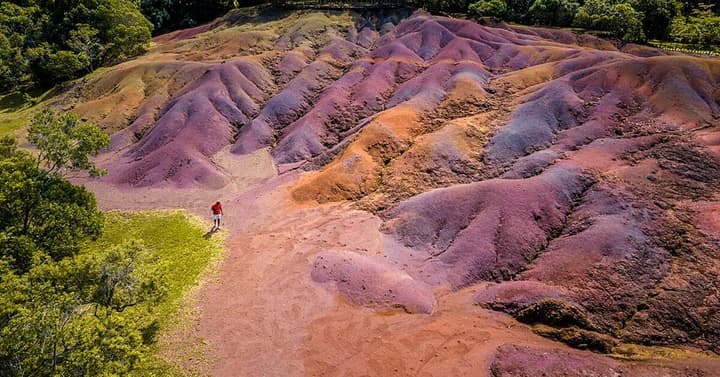
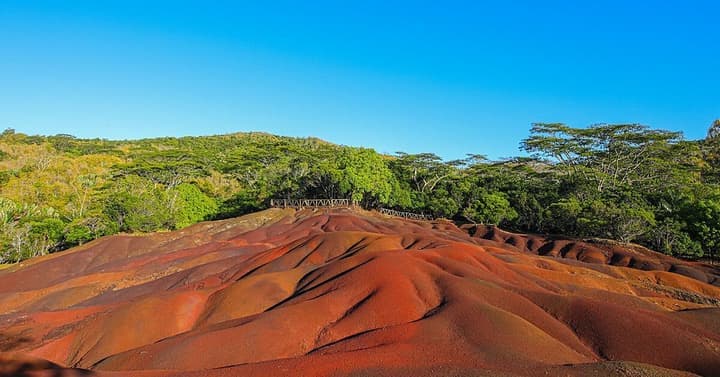
The most sensible plan is to visit Chamarel Waterfall as part of a Chamarel and southwest itinerary. Many travelers stop at the waterfall first, then continue to the Seven Coloured Earths and add other nearby places depending on time and energy. This sequence works well because the waterfall gives you a quick, memorable view before you move on to a slower walk or a longer scenic drive.
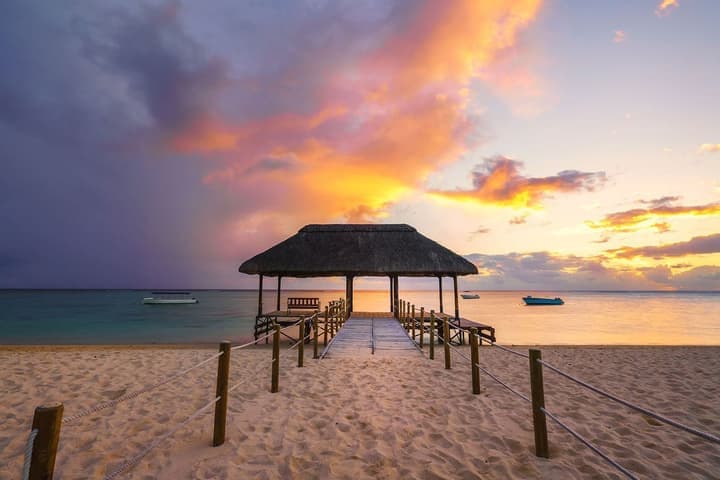
If you are staying on the west coast, in areas such as Flic en Flac, Tamarin or Black River, Chamarel can fit nicely into a half-day or relaxed day trip. You can leave in the morning, visit the waterfall and the surrounding attractions, then continue toward Le Morne or return to the coast for lunch or sunset. If you are coming from the north or east, allow more time for the road and avoid packing too many stops into the same day.
For a first visit to Mauritius, the waterfall works especially well in a broader south or southwest tour. Mountain roads, forested slopes, coastal views and village scenery make the day feel varied. If you are already nearby, it is also worth visiting as a standalone short stop, but the trip feels more rewarding when paired with other Chamarel sights.
When to go
Morning is usually the easiest time for a calmer visit. There tend to be fewer people, the temperature is more comfortable, and it is simpler to take photos without waiting for space at the viewpoint. Around midday, more tour groups may arrive, although the stop remains fairly straightforward because most visitors do not spend a very long time there.
After rain, the waterfall can look more powerful, but paths, steps and roadside areas may also be wetter. On a bright day, photos may have stronger contrast, while the water flow can sometimes look gentler. If the view matters to you, keep the plan flexible rather than expecting perfect light at a precise time. Clouds move quickly around the hills, and the mood of the landscape can change within minutes.
How to get to Chamarel Waterfall
Chamarel Waterfall is located in southwest Mauritius, close to the village of Chamarel. The easiest way to get there is by rental car, taxi with waiting time, private driver or organized tour. Public transport is less convenient for this specific visit because the final approach and timing are harder to manage, especially if you want to combine several stops in one day.
From Port Louis, the drive is commonly around one to one and a half hours depending on traffic, weather and the exact route. From west coast resort areas, the journey is often shorter, but the final sections can include winding roads and slower driving. If you are driving yourself, take it easy: the Chamarel area has bends, slopes and scenic sections where rushing reduces both safety and enjoyment.
If you do not plan to rent a car, arrange a round trip in advance. With a taxi or driver, agree on waiting time and any extra stops before you leave. A guided excursion is a good option if you want to see several southwest highlights without handling navigation, parking and timing yourself.
Safety and preparation
You do not need serious hiking preparation for the main viewpoint, but sensible footwear helps. The humid climate, steps, soil and stone surfaces can be slippery, especially after rain. Shoes with grip are a better choice than beach flip-flops if you plan to walk around or visit several nature stops in the same day.
Bring water, sun protection and a light layer for changing weather. Chamarel can feel cooler and wetter than the coast, but the sun can still be strong when clouds clear. A small rain jacket is useful during unsettled periods, particularly if you are combining the waterfall with other outdoor stops.
Stay behind barriers, avoid wet edges and do not use unofficial trails for a photo. Waterfall areas can be deceptive: rocks may look stable from a distance but become slick underfoot, and the force of water is not always obvious from the viewpoint. If you are visiting with children, keep them close on viewing platforms and set clear boundaries before you start taking pictures.
Is it suitable for children
Chamarel Waterfall is a good family stop if your children are comfortable with winding car roads. The main visit is short and does not require a long walk, while the waterfall is visually impressive enough to hold attention. For younger children, the key is pacing: bring water, avoid the hottest part of the day if possible and do not schedule too many stops without breaks.
Morning visits are often easier with families because there is less heat and less pressure around the viewpoint. If a child is tired after the drive, treat the waterfall as a short scenic pause rather than a long activity. It pairs well with a relaxed meal or a gentle continuation through the southwest.
Practical tips
- Combine the waterfall with the Seven Coloured Earths so the trip to Chamarel feels complete and efficient.
- Come in the morning if you prefer fewer visitors and a calmer atmosphere at the viewpoint.
- Wear shoes with grip, especially after rain or if you plan to visit other nature spots nearby.
- Do not build the whole day around a single photo: mountain weather and light can change quickly.
- If driving yourself, allow time for winding roads, slow sections and spontaneous scenic stops.
- If using a taxi or private driver, agree on waiting time and the full route before setting off.
Traveler impressions
Visitors often appreciate Chamarel Waterfall because it combines scale with easy access. You do not have to work hard for the view, yet the scene feels genuinely tropical: high rock, falling water, forest and a deep green valley. For many travelers, it becomes one of the clearest reminders that Mauritius is not only beaches and lagoons.
Occasional disappointment usually comes from expecting a long hike, swimming spot or full waterfall adventure. Chamarel is better understood as a scenic viewpoint and nature stop. With that expectation, the visit makes sense: arrive, enjoy the panorama, take photos and continue through one of the most attractive parts of the island.
Is Chamarel Waterfall worth it
Chamarel Waterfall is worth adding to your Mauritius itinerary if you want to experience the greener, volcanic side of the island. It is accessible, photogenic and easy to combine with other southwest attractions, which makes it a strong choice for a day trip by car or guided tour.
If your time on the island is very limited, do not plan the journey only around the waterfall. Make it part of a wider route through Chamarel, the Seven Coloured Earths, mountain viewpoints and the southwest coast. That way the drive feels worthwhile, and the waterfall becomes one highlight in a varied and memorable day.