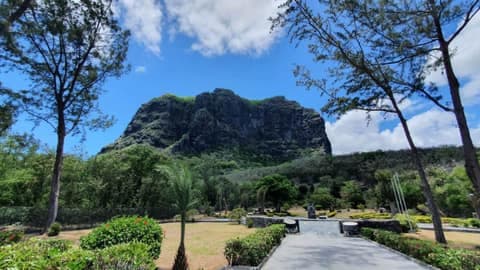
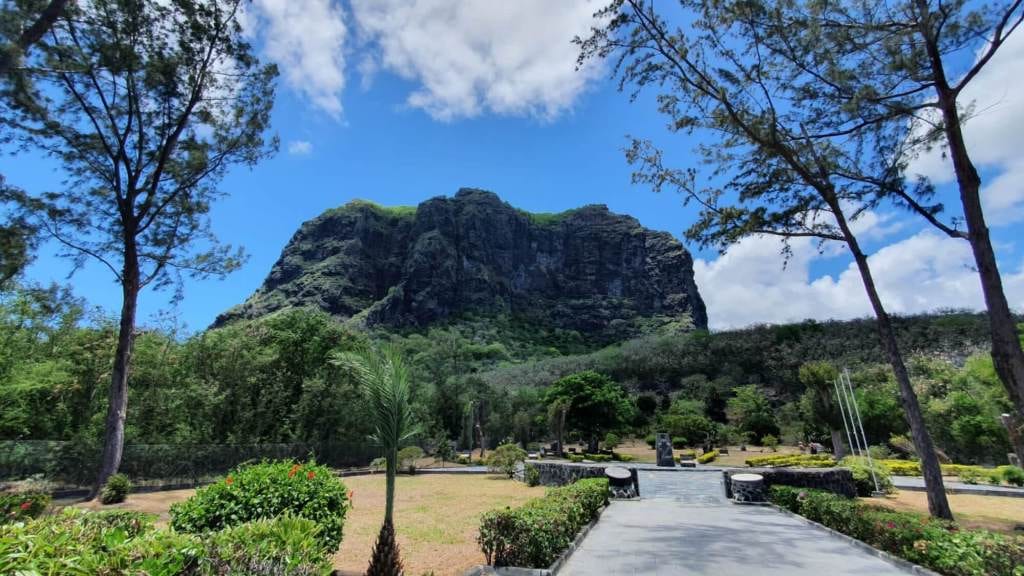
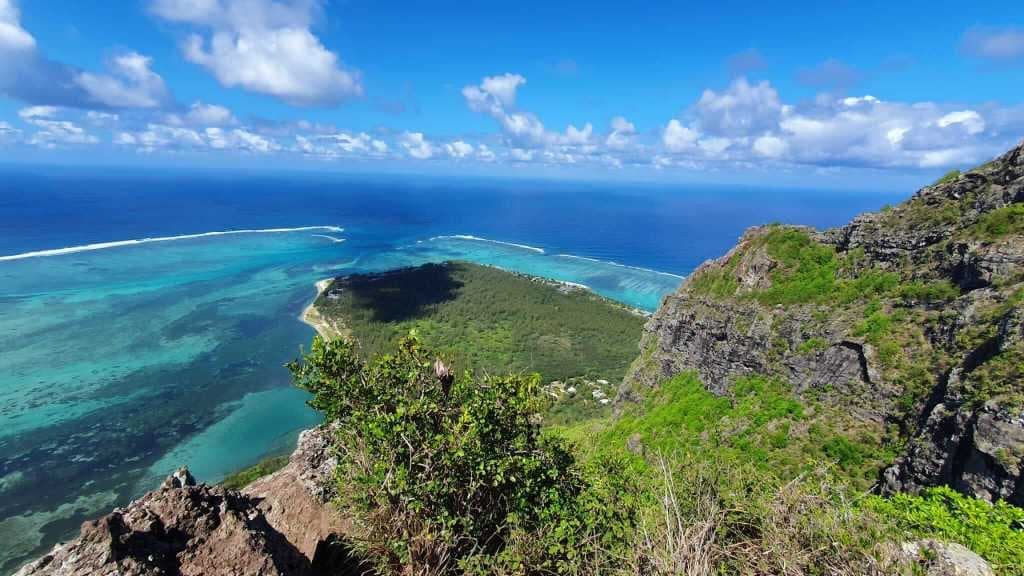

Le Morne Brabant is one of the defining landmarks of southwest Mauritius. Its basalt shape rises above the lagoon, beaches and windy coast of Le Morne, visible from far away and instantly recognizable. For some travellers it is a dramatic backdrop for photos; for others it is the goal of a morning hike. For Mauritius itself, it is also a place of deep historical memory.
The mountain is closely associated with the history of slavery and the search for freedom. In the past, the difficult landscape was linked with refuge for escaped enslaved people, and today the area is understood as a cultural landscape and a place of remembrance. A hike here is therefore not only a scenic activity. Even if you come for the views, it is worth learning the background and treating the mountain with respect.
Why visit
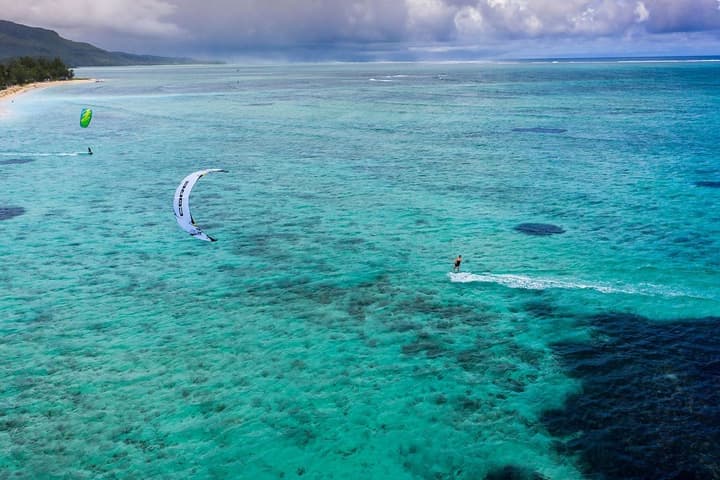
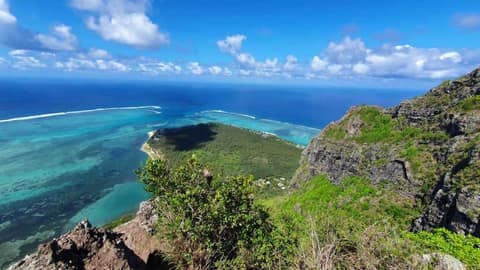
The main reward is the view over the southwest lagoon, reef lines, pale sand, Le Morne hotels and turquoise water where kitesurfers are often visible. On a clear day the panorama is striking, with the colours of the water shifting from shallow lagoon to deeper ocean. Even the lower sections of the route give a strong sense of height, space and coastline.
Le Morne is also compelling because natural beauty and island history are inseparable here. The visit helps you see Mauritius as more than a resort destination. It is a place shaped by colonial history, cultural memory and a landscape that carries meaning far beyond its appearance.
Who the hike suits
The route up Le Morne requires reasonable fitness, stable footwear and attention. The lower part can feel like a hike, while higher sections may become steeper and rockier, with places where you need to use your hands and move carefully. If you dislike heights, struggle with heat or do not enjoy uneven mountain paths, you may prefer viewpoints near the base or the beaches around the peninsula.
Many visitors choose to go with a local guide, especially on a first visit or if they want to understand the history of the site. Before you go, check current access rules, trail conditions and weather. After heavy rain, rocks can be slippery, and strong wind can make upper sections feel less comfortable.
What to bring
Bring closed shoes with good grip, water, a hat, sun protection and light clothing that allows movement. Exposed sections can become tiring quickly in the sun, so an early start is usually the best choice. Do not assume there will be convenient tourist facilities along the route; carry water and a small snack before you begin, and leave unnecessary items at your hotel or in the car.
A phone or camera is useful, but on steeper parts it is better to stop safely before taking photos. Avoid leaving the trail for a better angle and do not approach edges when the ground is wet or unstable. Le Morne is most enjoyable when you can look around calmly rather than fight the route.
Planning your day
Morning is the best time to arrive, before the heat builds. After the hike, you can rest on Le Morne beach, have lunch in the area or continue along the southwest coast. If you do not plan to climb, the mountain is still worth seeing from the beaches, coastal roads and nearby viewpoints.
Weather can change quickly in the southwest. Wind, cloud and humidity affect both comfort and visibility. If the summit area is hidden in thick cloud, the views will be limited and the climb may feel less rewarding. On those days, it can be better to postpone the hike and enjoy the lagoon instead.
Nearby ideas
The Le Morne peninsula combines well with beach time, kitesurfing, a drive along the southwest coast or a nature-focused route toward Chamarel. A good day might include an early hike, a swim, scenic stops and a relaxed dinner by the coast. Try not to overload the schedule after the climb, because heat and fatigue can catch up quickly.
Overall impression
Le Morne Brabant is where Mauritius feels especially powerful and memorable. It offers the postcard beauty of a turquoise lagoon, the satisfaction of a physical hike and the depth of an important historic landscape. If you prepare well, choose suitable weather and approach it as more than a photo stop, the mountain can become one of the strongest experiences of your trip.
Cultural context
Before visiting, it is worth spending a few minutes on the history of Le Morne, because it changes the way the route feels. The mountain has become a symbol of remembrance for people who sought freedom in difficult parts of the island. For that reason, it deserves more than a quick climb, photo and departure. Even a short stop near the base can feel more meaningful when you understand why this landscape matters to Mauritians.
If you go with a guide, ask not only about the trail but also about the meaning of the place, local names, winds, the lagoon and life on the peninsula. These conversations make the hike richer and keep Le Morne from becoming only a scenic backdrop. If you walk independently on accessible sections, read basic background beforehand and follow signs on site.
If you do not climb
You do not have to hike to appreciate Le Morne. The mountain is impressive from the beach, from the road around the peninsula and from the lagoon during sea activities. For families with young children, travellers without hiking experience or anyone visiting on a very hot day, this may be the better choice. You still see the great southwest silhouette and feel the scale of the place without unnecessary strain.