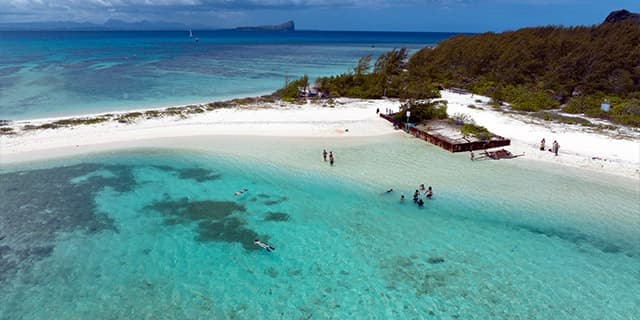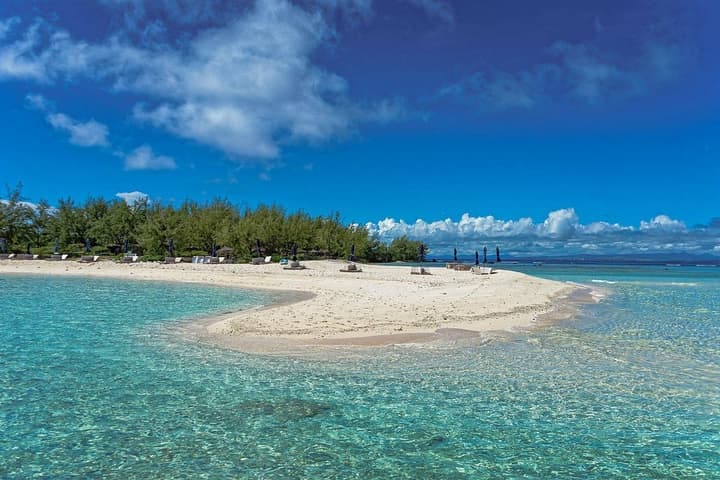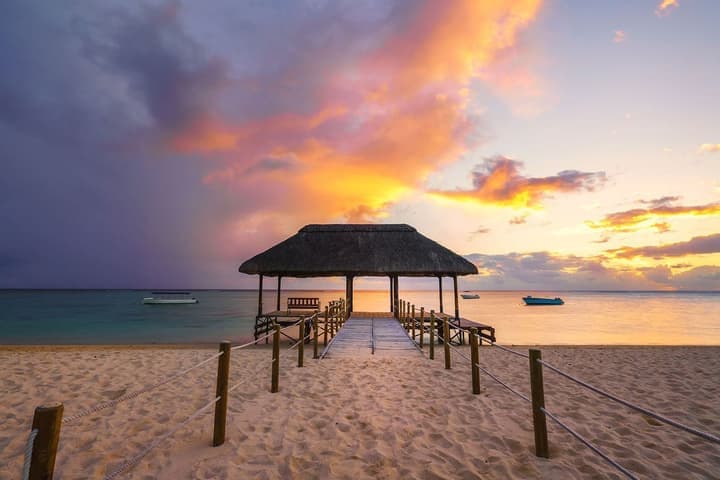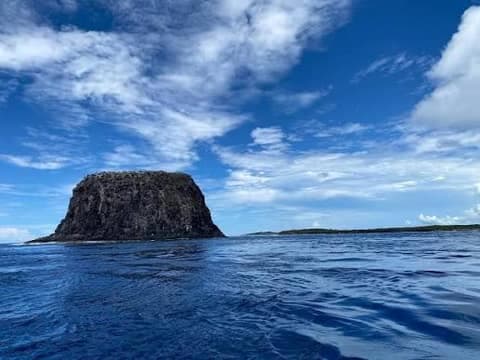
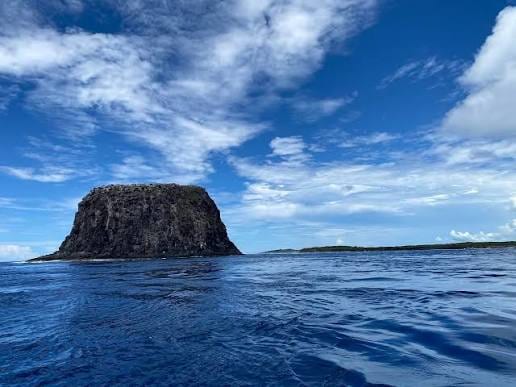

Pigeon Rock, or Rocher aux Pigeons, is a small rocky formation off the north coast of Mauritius, near Flat Island. It is not a beach and not a classic attraction with paths, cafes, and viewing platforms. Travelers usually come here for open-sea scenery, isolated rock shapes, birdlife, and the wilder marine atmosphere around the northern islets.
The place is best understood as part of a boat trip rather than a destination for a long independent visit. Rising from the water, the rock looks rugged and photogenic, especially when seen against waves, the horizon, and nearby islands. For visitors who have already explored the main beaches of Mauritius, Rocher aux Pigeons adds a quieter, more natural note to a northern-island itinerary.
Why Pigeon Rock is worth seeing
The appeal of Pigeon Rock is its raw coastal character. There is no developed visitor infrastructure on the rock itself: no restaurants, no promenade, no marked trail, and no formal sightseeing circuit. That simplicity is exactly what makes it interesting for travelers who want to see more than the resort side of Mauritius.
The name is connected with the birds found in this part of the coast. From a boat, you may see birds circling over the rocks or resting on ledges. Even if birdwatching is not the main purpose of your trip, these details make the landscape feel alive. It is not just a rock in the ocean, but part of a coastal ecosystem shaped by wind, waves, reefs, and seabirds.
The views are another reason to include Rocher aux Pigeons in a northern route. The rock photographs well from the water, especially when the boat keeps enough distance to show the scale of the sea around it. This is a quiet, scenic stop rather than a place with a long checklist of activities.
How visits usually work
Pigeon Rock is usually seen from a boat during excursions to the northern islands. The exact format depends on the route. Some boats pass by the rock for views and photos, while others pause nearby when conditions allow for swimming or snorkeling in a suitable area around the reefs. Landing on the rock itself is usually not the point of the visit, as the surface is rocky and the natural setting needs to be treated with care.
If seeing Rocher aux Pigeons matters to you, ask the boat operator before booking whether it is included in the itinerary. Excursion descriptions often focus on better-known islands, while Pigeon Rock may be mentioned only as an additional landmark along the way. A direct question helps avoid mismatched expectations.
The most enjoyable conditions are calm seas and clear weather. Smooth water makes photography easier, moving around the boat more comfortable, and the overall trip more relaxed. On windy days the scenery can look more dramatic, but the experience depends much more on sea conditions.
What to bring
Because the visit is sea-based, preparation matters more than it would for a normal viewpoint. Bring sunscreen, a hat, drinking water, sunglasses, a light layer against the wind, and a dry bag or waterproof pouch for your phone. Even on a cloudy day, sun exposure on the water can feel stronger than expected because of reflection from the sea.
For photos, use a secure strap or protective case for your camera or phone. Boats can move suddenly, and spray can appear without warning. If snorkeling may be part of the trip, ask in advance whether masks and fins are provided or whether you should bring your own gear.
Footwear should be practical for boarding the boat and stepping onto wet surfaces at the start or end of the trip. You normally do not need special shoes for the rock itself, because most visitors see it from the water, but non-slip soles are always useful on boat excursions.
Who will enjoy it
Rocher aux Pigeons suits travelers who enjoy natural scenery, boat routes, seabirds, and quiet stops without heavy infrastructure. It works especially well for those already planning a northern-island excursion and wanting one more distinctive coastal landmark in the route.
A visit can work with children if they are comfortable on boats, in the sun, and on the water for an extended period. For younger children, a life jacket, shade, enough water, and a not-too-long itinerary are important. If anyone in your group is prone to seasickness, check the conditions carefully and choose a calmer day when possible.
Travelers looking for a beach with loungers, cafes, and easy swimming from shore may find Pigeon Rock too simple. This place is less about services and more about scenery, marine atmosphere, and the feeling of being away from the busier resort coast.
Practical tips
Plan Pigeon Rock as part of a northern boat route rather than as a standalone goal. The experience is stronger when combined with other nearby islands, changing water colors, reef views, and wider coastal scenery. Before departure, check the weather and sea conditions, as they have the biggest effect on comfort.
Do not expect facilities at the rock itself. Anything you need should be brought with you or provided on the boat. Respect the natural environment: take all rubbish back, avoid disturbing birds, and do not try to land where the route does not allow it or where it could damage the setting.
The best attitude for Rocher aux Pigeons is relaxed curiosity. It is a small point on the map, but it reveals another side of Mauritius: not only beaches and hotels, but open water, rocky silhouettes, seabirds, and the varied northern coastline that makes this part of the island so memorable.