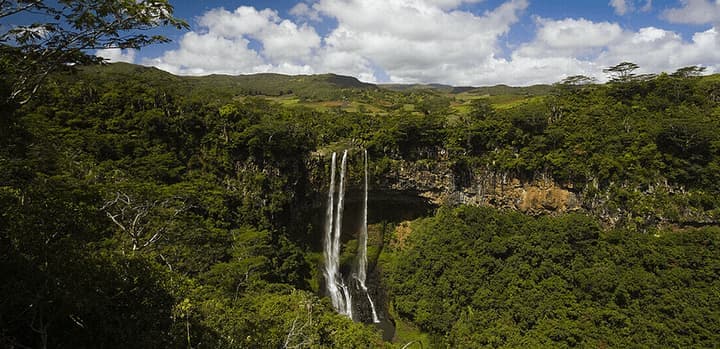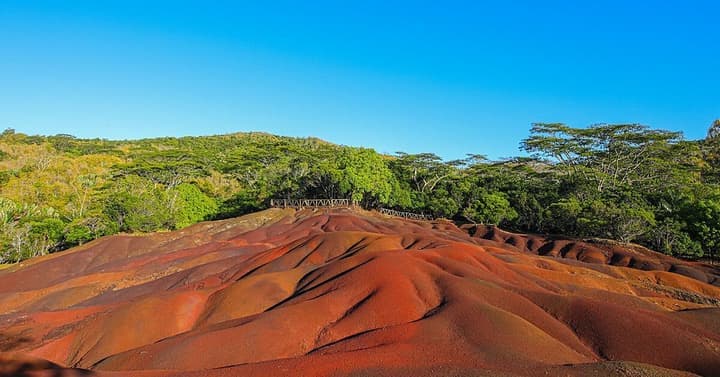
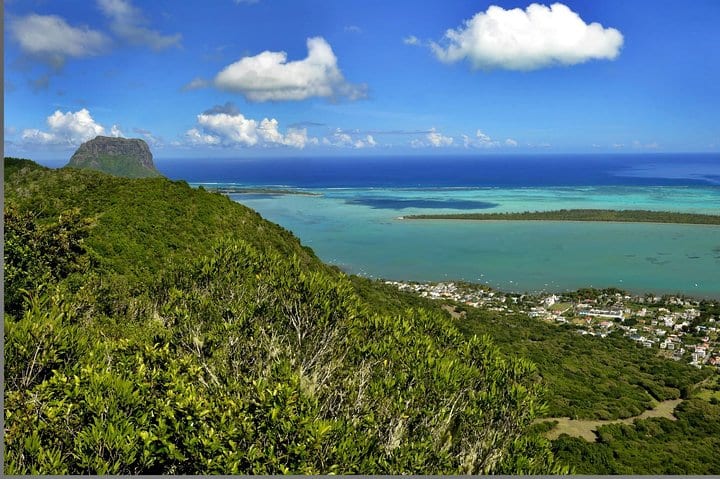
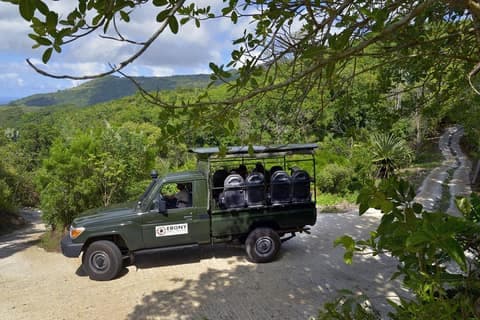
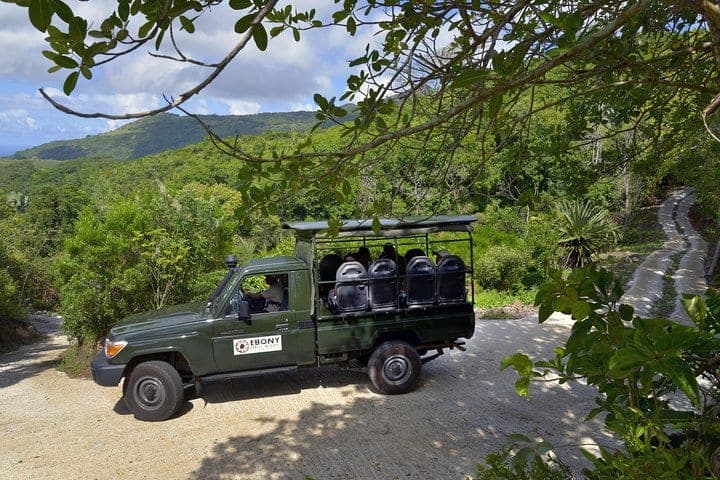

Ebony Forest Reserve Chamarel sits in the green south-west of Mauritius, close to the best-known natural sights around Chamarel. It is not just a quick photo stop. The reserve is best experienced as a slow nature walk through restored native woodland, with viewpoints, birds, shaded paths and a clear conservation story behind the scenery.
The main theme here is restoration. Much of Mauritius was once covered by native forest, but logging, plantations and introduced species changed the island dramatically. Ebony Forest gives visitors a practical look at how endemic trees, birds and plants can return when a landscape is carefully protected. That makes the visit interesting not only for hikers and birdwatchers, but also for travellers who want to understand what Mauritius looked like before roads, sugar estates and beach resorts reshaped the island.
Why visit Ebony Forest
The reserve is a strong addition to a day in Chamarel because it offers a quieter, more reflective experience than many of the area’s headline stops. After viewpoints, waterfalls and colourful landscapes, Ebony Forest invites you to slow down: walk on raised sections, listen for birds, read the forest as a living place and notice how the vegetation changes along the route.
It suits travellers who enjoy nature walks without needing a demanding trek. You do not have to be an experienced hiker, but you should be comfortable with tropical humidity, uneven ground and weather that can change quickly. On a clear day, the viewpoints can open towards the mountains, green slopes and parts of the south-west coast. On a cloudy day, the forest often feels even richer and more atmospheric.
What to see
The restored ebony woodland is the heart of the reserve. Ebony trees once formed an important part of the Mauritian landscape, and seeing them here is not only a botanical detail but also a reminder of what conservation can rebuild. Look for both mature trees and younger plantings: the younger growth shows that restoration is a long process, not a finished display.
The walking routes include forest paths and raised wooden sections that help visitors move through dense vegetation while protecting fragile soil and young plants. These walkways are especially useful after rain, when the ground may be slippery. Along the way, the forest can feel enclosed and shady in one section, then suddenly open towards brighter slopes or a wider view.
The viewpoints are another highlight. They connect the close-up forest experience with the broader landscape of south-west Mauritius. If the weather is clear, take your time rather than treating the lookout as a single photo moment. The view often reveals itself in layers: trees in the foreground, hills and ridges beyond them, then the coast and ocean in the distance.
Birds and conservation
Ebony Forest is rewarding for birdwatching, especially if you walk quietly and pause often. The reserve is associated with rare and endemic species linked to Mauritius’ native forests. You do not need to be a specialist to enjoy this. Even casual visitors may notice movement in the canopy, calls from the trees or birds crossing open sections of the trail.
Wildlife sightings are never guaranteed, and that is part of the experience. It is better to arrive with patience than with a strict checklist of species or photos. The visit works well when you allow time for observation: stop, listen, scan the branches and let the forest become more than a green background. For adults and children alike, this makes conservation feel concrete rather than abstract.
How to plan your visit
Allow enough time to walk without rushing. Ebony Forest is less satisfying if it is squeezed into the end of an overloaded itinerary. A good visit includes the main walking areas, a stop at one or more viewpoints, time to read any interpretation available during your visit and a buffer for weather.
The exact visit format can depend on the route you choose, trail conditions and the reserve’s current rules. Before you go, check the official website or fresh local information for tickets, access to specific sections and any guided options. Avoid relying on old prices or timetables, because those details can change.
How to get there
The reserve is in the Chamarel area, within reach of La Gaulette and the south-west coast. The most convenient way to visit is by rental car, private driver or a tailored south-west itinerary. Roads in this part of Mauritius are scenic, but they can also be narrow and winding, so it is worth building a realistic day rather than adding too many stops.
If you are already visiting Chamarel, it makes sense to combine Ebony Forest with nearby natural attractions. The day can include viewpoints, forest, waterfalls, colourful landscapes and village stops. Still, give the reserve its own time block. It is much more enjoyable as a proper walk than as a rushed extra.
Is it suitable for children?
Ebony Forest can work well for families if children are comfortable walking on trails and are interested in nature. The reserve does not require a difficult hike, but there may be heat, humidity, steps, wooden walkways and sections where everyone needs to watch their footing. With younger children, choose a shorter visit and plan frequent pauses.
Bring water, sun protection and practical shoes. It also helps to frame the visit before you arrive: this is not an amusement park, but a living forest where the main rewards are birds, trees, views and quiet details. Presented that way, the walk can feel like an exploration rather than a long path between viewpoints.
Preparation and safety
Closed shoes or secure walking sandals with good grip are the best choice. After rain, paths and wooden surfaces may be damp. Light clothing, sun protection and insect repellent are also useful, particularly if you plan to move slowly and spend time in shaded areas.
Weather around Chamarel can feel different from the coast. The hills and forest create a more humid microclimate, and showers are possible even when the seaside looks brighter. Rain does not necessarily ruin a visit, but it does change the experience: the forest becomes lush and fragrant, while the trails may require more care.
Practical tips
- Treat the reserve as a nature walk, not as a quick box to tick on a sightseeing route.
- Check current visiting conditions before you go, especially if tickets, guided options or trail access matter to your plans.
- Carry water, because humidity in the forest can feel stronger than expected.
- Walk quietly if you want a better chance of noticing birds and hearing the forest.
- Choose proper footwear rather than beach sandals.
- Stay on marked routes and avoid touching or removing plants; restored forest is sensitive to unnecessary pressure.
Is Ebony Forest worth it?
Ebony Forest Reserve Chamarel is worth visiting if you want to see Mauritius beyond the beach postcard. It is not the loudest attraction in the south-west, and that is exactly its strength. The reserve offers forest, views, birds and a meaningful look at how island ecosystems can recover when people commit to protecting them.
The best way to experience it is to arrive without rushing, walk at your own pace and leave room for small discoveries. Then Ebony Forest becomes more than an add-on to Chamarel. It becomes a quiet, memorable chapter in the story of Mauritius’ landscapes and native wildlife.